Choosing Security Patrol Services Near You: A Zone-by-Zone Sacramento Guide
PPO #1227308/21/20264584 wordssecurity patrol services near me
"Security patrol services near me" is the most-searched security phrase in the Sacramento region, and it is also the least useful one. Proximity is not the variable that determines whether a patrol contract works. Fit is. A patrol program that keeps a Roseville luxury retail plaza quiet will fail on a North Highlands residential block, and the specification that protects a Rancho Cordova tech campus is the wrong specification for an Elk Grove carport row.
This guide is the zone-by-zone version of that argument. Below, we walk the Greater Sacramento footprint neighborhood by neighborhood — what each area actually is, what the patrol specialty for that area is, what the correct contract looks like, and how to verify a vendor before you sign. Every zone links to the relevant coverage page, and we include maps so you can see the geography that drives the recommendation.
What "near me" should actually mean
When a buyer types "security patrol services near me," what they usually want is three things they never say out loud: a unit that can be here quickly, a company that already knows this street, and a person who answers the phone at 2am. Distance is a proxy for all three, and it is a poor one.
A patrol company headquartered ten minutes away that has never worked your property class is further from solving your problem than one with an existing route through your corridor. What matters:
The four things "near me" is really asking
Route density
Does the company already run a route within a few minutes of your parcel? Route density, not office address, determines how many passes you can afford and how fast a callback arrives.
Zone familiarity
Have their officers worked your property type in your neighborhood? Post orders written by someone who knows the corridor beat generic templates every time.
Dispatch availability
Is there a live human on dispatch overnight, or a voicemail box that forwards to a phone that is off? Ask this question directly and test it before signing.
Documented response window
A number, in minutes, written into the contract. Everything else is marketing.
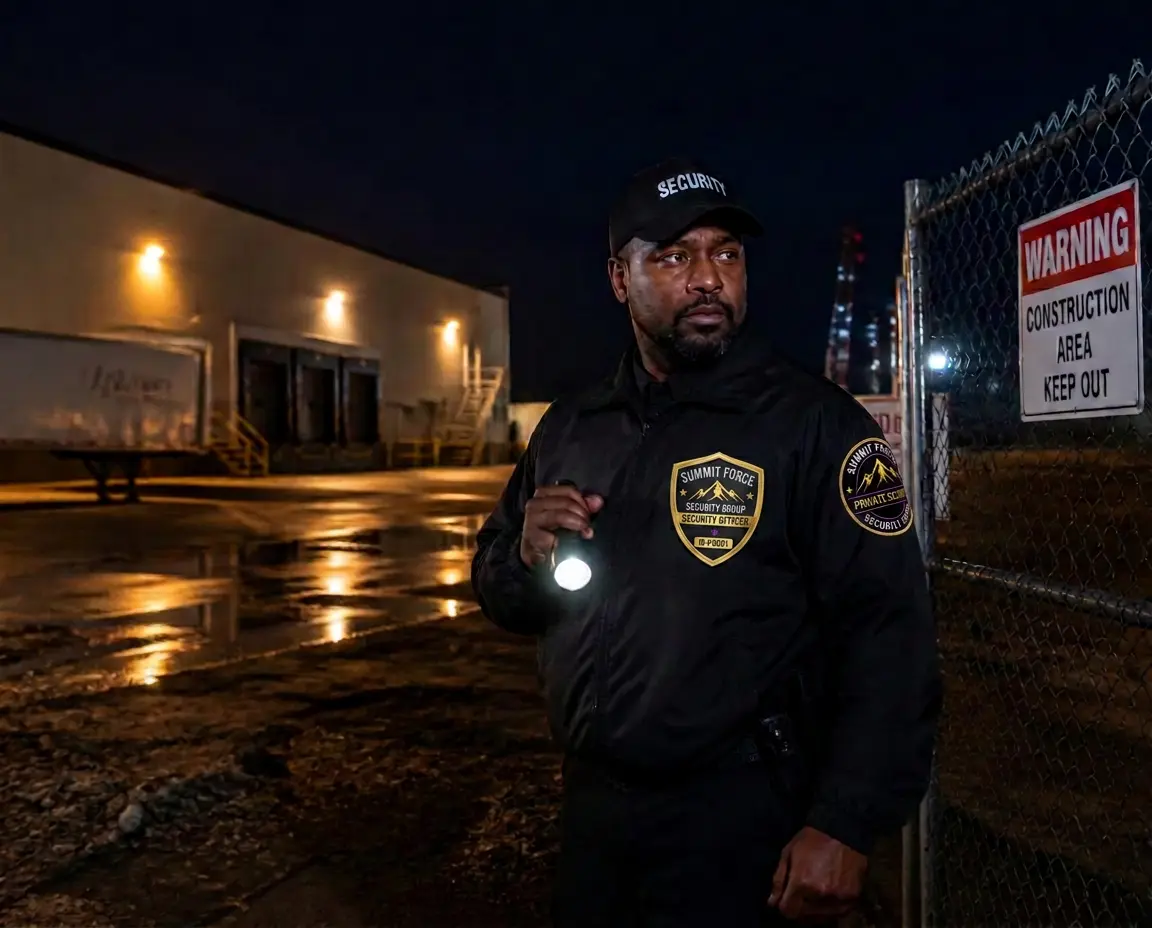
Summit Force Security Group runs marked patrol routes across Sacramento County, Placer County, Yolo County and the Solano corridor from a Sacramento base — PPO #122730, BSIS licensed. Verify any bidder, including us, at the BSIS license lookup before the walkthrough.
Zone profiles: how patrol changes street by street
Every zone below gets the same four-part treatment: what the area is, the dominant risk pattern, the patrol specialty that fits, and the coverage spec we would write. Find your zone, then check the two adjacent ones — corridors do not respect city lines.
Downtown & Midtown Sacramento — pedestrian density and structure exposure
The urban core is a foot-traffic environment with a parking-structure problem. Grid-pattern streets, ground-floor retail and restaurants, mixed residential above, and a large volume of after-hours pedestrian activity between R Street, the Capitol corridor and the Handle District. The dominant risk is not forced entry; it is unauthorized access to structures and stairwells, vehicle break-ins on upper decks, closing-hour incidents at bars and restaurants, and loitering in recessed doorways.
Patrol specialty: foot patrol and vertical sweeps. A vehicle patrol that circles the block never sees the level-four stairwell where the actual problem lives.
Coverage spec: officer on foot with structure sweeps at randomized intervals, closing-hour presence for ground-floor tenants, and a documented stairwell and elevator-lobby check on every tour. Retail and restaurant tenants should specify escort-to-vehicle for closing staff. Details on our Sacramento security guard services page and the restaurant security program.
Land Park, Curtis Park & Tahoe Park — established residential, low-density
Older single-family stock, deep lots, mature tree canopy, and the low ambient lighting that comes with both. The pattern here is opportunistic: vehicle entries, package theft, garage and side-gate access, and occasional catalytic converter activity concentrated on specific blocks near arterials.
Patrol specialty: randomized residential passes with lighting and access audits. In these neighborhoods, the highest-return recommendation we make is often free — trim the hedge, move the sensor, add a light at the side gate.
Coverage spec: neighborhood association or block-group patrol package with two to four randomized nightly passes, photo-documented exceptions, and a monthly summary the association can circulate. See HOA and community patrol.
Oak Park & Fruitridge — mixed commercial-residential transition
Commercial frontage on Broadway, Stockton Boulevard and Fruitridge with residential immediately behind, plus active small-business corridors and a substantial amount of newer infill. The risk profile is split: storefront exposure at night and rear-lot activity behind commercial buildings that back onto residential alleys.
Patrol specialty: rear-lot and alley coverage. Almost every problem in this zone happens in the space between the store's back door and the neighboring fence line, which is exactly where a front-street pass sees nothing.
Coverage spec: vehicle patrol with mandatory rear-lot entry and a documented alley walk, plus closing-hour presence for retail tenants. Written contact protocols matter here — see our California case law library for the framework we train to.
North Sacramento, Del Paso Heights & Del Paso Boulevard — commercial strip and residential mix
Older commercial strip frontage with residential blocks behind, arterial through-traffic on Marysville Boulevard and Del Paso, and a mix of active small businesses, vacant storefronts and light industrial. Vacant parcels are the multiplier here: an unsecured building attracts activity that spills onto neighboring occupied parcels.
Patrol specialty: vacant property checks combined with occupied-parcel passes on the same route, so the vacancy next door does not become your problem.
Coverage spec: multi-parcel patrol package, interior checks on vacant structures where legal access allows, board-up condition logging, and photo documentation of every entry point on every pass.
Natomas (North & South) — planned residential and business park
Master-planned communities, wide arterials, extensive greenbelts and bike trails, plus the business-park and airport-adjacent commercial cluster along Gateway Oaks and Del Paso Road. Two very different risk profiles inside one zone: greenbelt-adjacent residential exposure at the rear fence line, and after-hours office and light-industrial parcels with large empty parking fields.
Patrol specialty: greenbelt-edge patrol for residential, empty-lot presence for commercial. Both are perimeter problems rather than entry problems.
Coverage spec: for HOAs, randomized passes with a documented greenbelt-edge and park-perimeter check; for business parks, patrol passes timed to the empty window with lot sweeps and a documented door-pull on every suite. See HOA security in Natomas.
Arden-Arcade, Arden Fair & Point West — retail concentration
The densest retail cluster in the county, with large surface lots, hotels, and a heavy mix of daytime and evening traffic. Risk is dominated by parking-lot activity: vehicle break-ins, cart-related theft, loitering at lot edges, and after-hours activity behind big-box loading areas.
Patrol specialty: high-visibility lot presence during trading hours and structured after-hours sweeps of loading zones.
Coverage spec: marked-unit presence with slow, visible lot circuits during peak hours rather than fast passes, plus documented loading-dock checks after close. Retail-specific detail is on our retail and shopping center coverage.
Carmichael, Fair Oaks & Orangevale — suburban residential with river corridor
Established suburban neighborhoods, larger lots, equestrian and river-adjacent parcels, and access points to the American River Parkway. The parkway is the defining feature: it creates unlit, unwatched perimeter along the rear of many properties and generates transient activity in the adjacent zones.
Patrol specialty: perimeter and access-point checks along parkway-adjacent frontage, plus contact documentation.
Coverage spec: patrol with named parkway access points as fixed checkpoints, photo logs of encampment-adjacent conditions, and a clear written escalation path to Sacramento County Sheriff for anything requiring law enforcement. See Carmichael HOA patrol and Fair Oaks.
Citrus Heights & Antelope — commercial rear lots and greenbelt edges
Mature commercial corridors on Auburn Boulevard, Greenback Lane and Sunrise, with dense residential behind and greenbelt strips threading between. Persistent transient contact behind commercial buildings, encampment formation along greenbelt edges, and shopping-center rear-lot activity define this zone.
Patrol specialty: consistent, documented, de-escalation-first contact work. This is a zone where the quality of the officer's written report matters more than the size of the officer.
Coverage spec: multiple randomized passes weighted to the late-evening and pre-dawn windows, mandatory rear-lot entry, photo documentation of every contact and every re-formation, and a monthly trend summary for the property manager. Full local detail on our Citrus Heights private patrol page and Citrus Heights HOA coverage.
North Highlands & Rio Linda — residential and light-industrial intermix
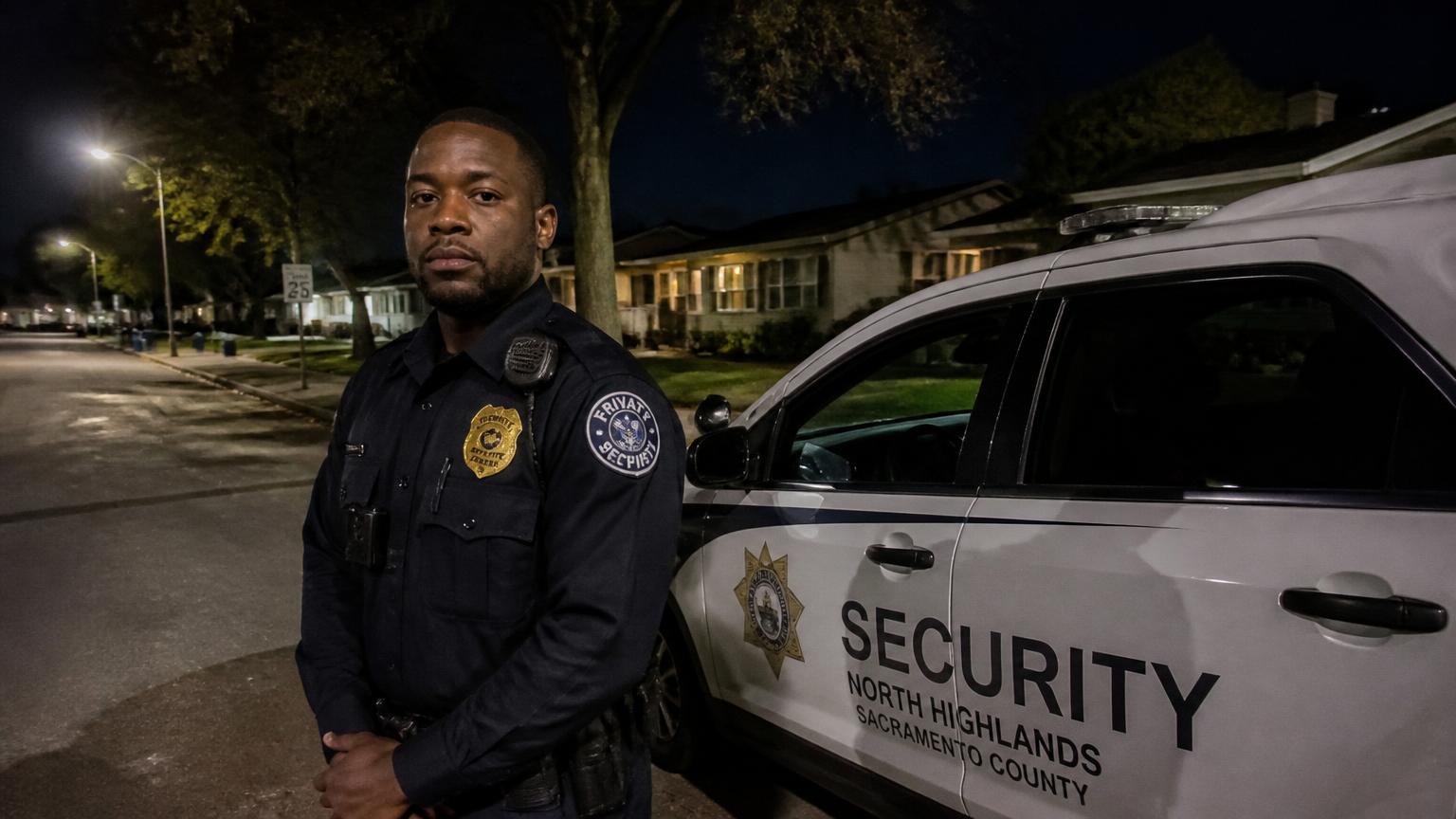
This is the zone most often mis-specified. North Highlands is predominantly older residential — single-story homes, wide streets, alley-free blocks — intermixed with light industrial, storage yards, equipment lots and former base-adjacent parcels. Rio Linda adds semi-rural residential with larger lots, outbuildings and livestock parcels. That intermix is the whole story: residential blocks sit directly against yards holding trailers, equipment and metal.
Patrol specialty: dual-mode routing. The same route has to run residential passes for presence and yard checks for asset protection, and those two jobs want different dwell times and different documentation.
Coverage spec: residential passes at randomized intervals for visibility, plus fixed-checkpoint yard inspections with gate, lock, trailer and material-stack photos. Metal and equipment theft in this zone concentrates in the pre-dawn window, so weight passes accordingly rather than spreading them evenly. Coverage detail on our North Highlands community patrol, Antelope and Rio Linda pages.
Rancho Cordova — industrial and tech hub with scattered residential
Rancho Cordova is the most operationally interesting zone in the region: a genuine industrial and technology employment hub — office campuses, data and back-office facilities, light manufacturing, distribution and equipment yards — with residential pockets scattered between and along the Folsom Boulevard corridor, plus the light rail line running through it.
The risk profile is layered. Tech and office campuses have large empty parking fields and after-hours access-control exposure. Industrial parcels along Mather Field, Sunrise and the Folsom corridor have yard, trailer and copper exposure. The scattered residential creates pedestrian pathways through commercial parcels at hours when nobody is watching, and the light rail stations concentrate pedestrian flow at specific points.
Patrol specialty: multi-tenant industrial routing with randomized arrival timing. Long frontages with multiple curb cuts make a predictable schedule effectively a published one.
Coverage spec: gate and door-pull checkpoints on every tenant suite, trailer and yard photo logs, randomized arrival windows rather than fixed times, and a documented pedestrian-pathway sweep between commercial and residential edges. For campuses with genuine access control needs, a standing post during the unoccupied window outperforms any pass count. This zone has its own dedicated page: vehicle patrol services in Rancho Cordova, plus Rancho Cordova HOA patrol for the residential pockets.

Roseville & Rocklin — high-end residential and premium mixed commercial
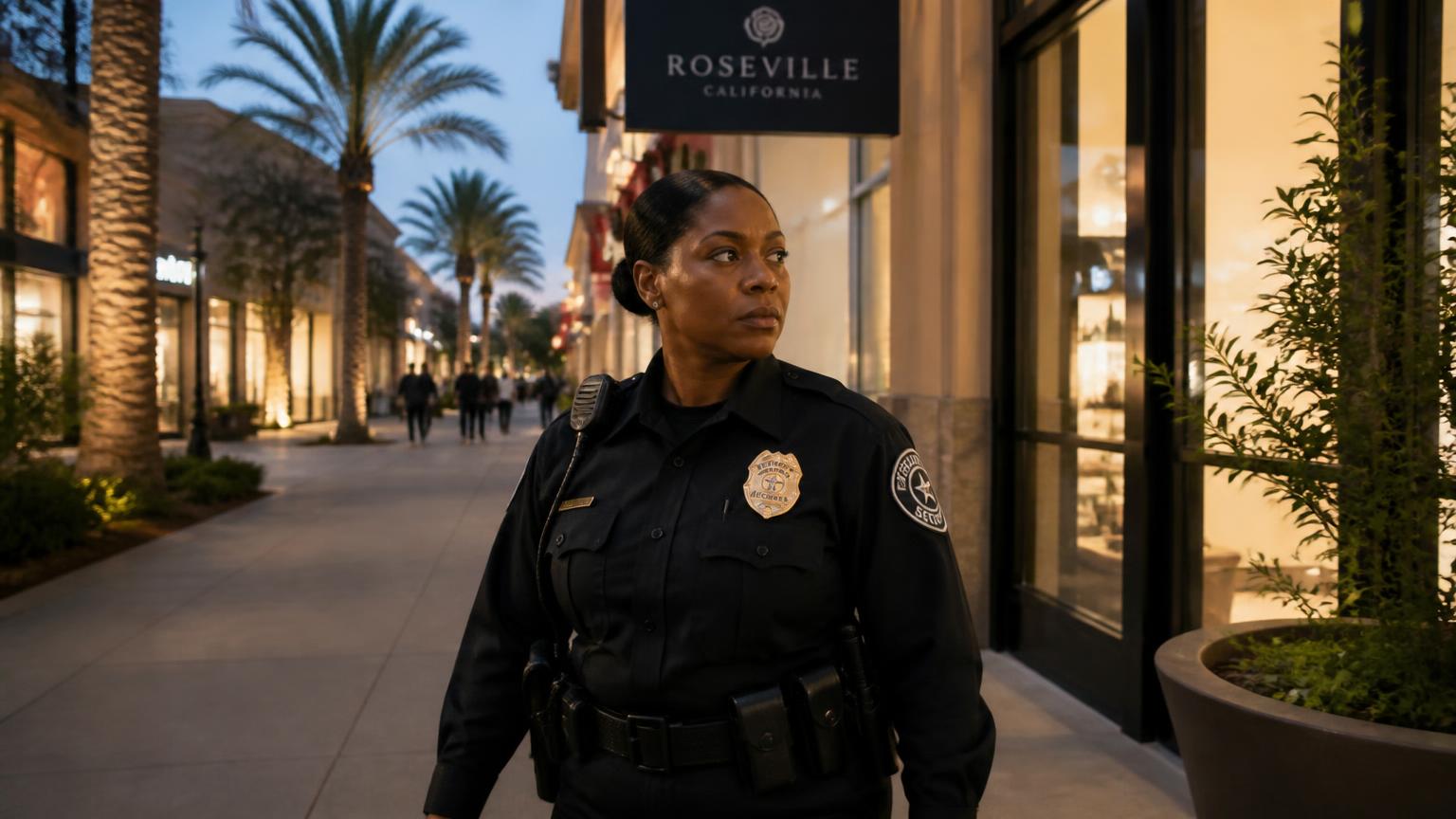
Roseville is the luxury and premium-retail zone: high-value residential in West Roseville, Sun City and the Blue Oaks corridor, upscale outdoor retail at the Galleria and Fountains, and a substantial medical and professional-office presence. Rocklin adds newer master-planned residential and a growing commercial spine along Stanford Ranch and Sunset.
The risk profile is different from every zone south of the county line. Losses here are lower in frequency and higher in value: residential burglary targeting specific high-value goods, organized retail theft at premium storefronts, vehicle theft from residential driveways, and reputational sensitivity that makes visible enforcement a delicate balance.
Patrol specialty: discreet high-visibility presence. Communities in this zone want the deterrent effect without the impression of a problem, which means presentation, vehicle condition and officer bearing carry real weight.
Coverage spec: for HOAs, randomized passes with strict parking and after-hours amenity enforcement, plus board-ready monthly documentation. For premium retail, closing-hour presence, escort-to-vehicle for staff, and coordination with center management on organized-theft patterns. Board and manager detail on Roseville HOA and community patrol and Rocklin.
Granite Bay, Loomis & Folsom — low-density, high-value, long drive times
Large parcels, gated and semi-gated communities, custom homes, and significant distance between checkpoints. Folsom adds a historic commercial district, a large retail cluster and a technology employer presence. The defining constraint is geography: a pass here costs more in drive time than a pass in Arden, which changes the economics of frequency.
Patrol specialty: dwell-weighted patrol. Fewer, longer, better-documented stops beat a higher pass count that is mostly windshield time.
Coverage spec: extended dwell per checkpoint, lighting and camera-coverage audits on the first month, and an honest contracted response window that reflects real drive times. See Folsom, Granite Bay, Loomis and Gold River.
El Dorado Hills & Cameron Park — foothill residential and business park
Hillside residential with winding access roads, a growing business park cluster, and wildland interface along the eastern edge. Access-road geometry is the operational fact here: single points of entry to many communities make gate discipline effective and make response predictable, but they also mean a blocked road is a real contingency.
Patrol specialty: gate and access-road control with documented community entry logs where the HOA permits.
Coverage spec: entry-point checkpoints, amenity closure enforcement, and seasonal awareness of wildland-interface conditions. Coverage at El Dorado Hills, Cameron Park and Placerville.
Elk Grove, Laguna & Franklin — newer multi-family and retail
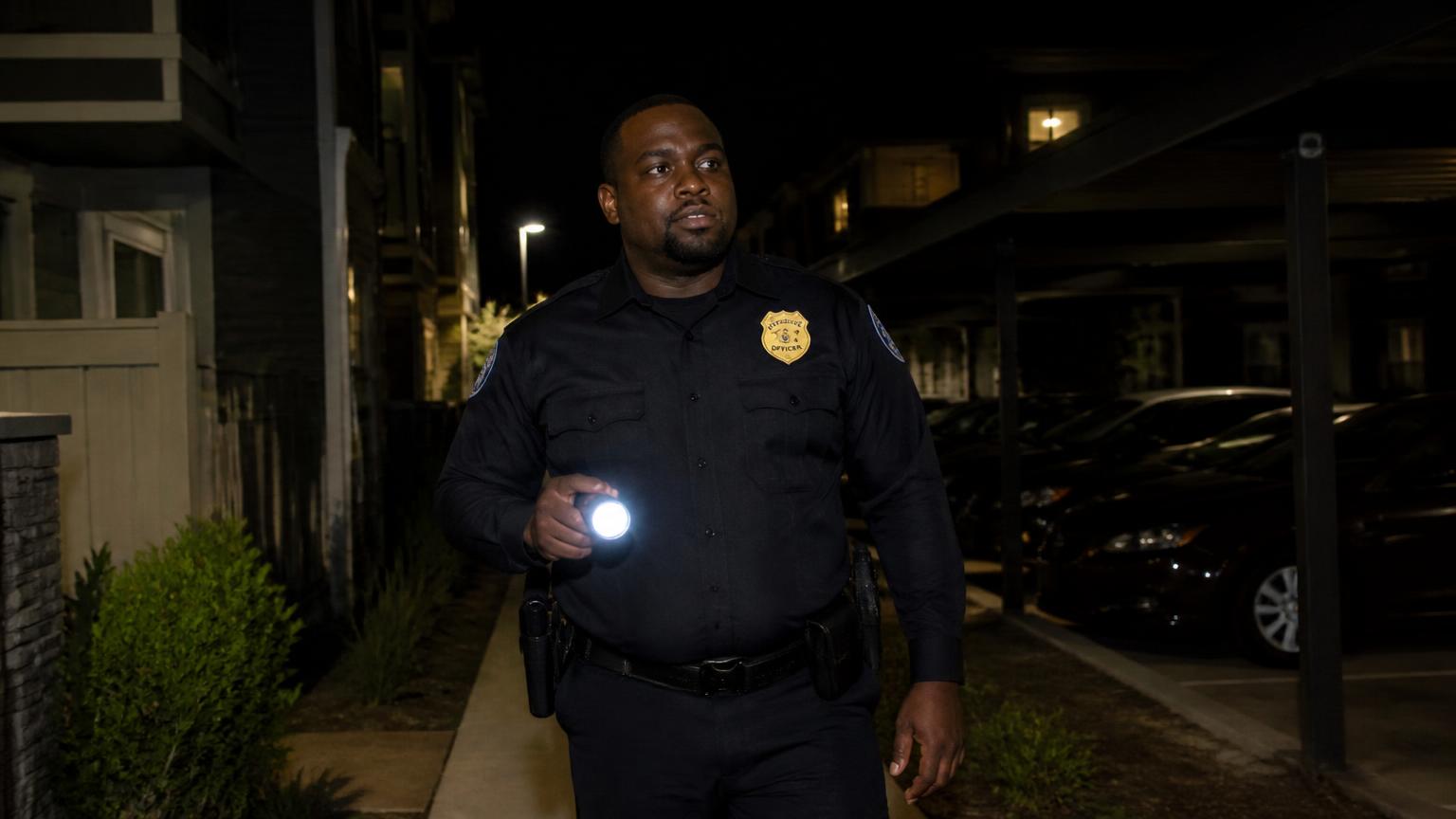
Large newer multi-family stock with carports, detached garages and interior breezeways, plus arterial retail and an expanding commercial base. The pattern is dense and specific: carport vehicle entries, package theft, unauthorized amenity use after hours, and juvenile activity concentrated in particular rows and particular hours.
Patrol specialty: carport-row and breezeway foot coverage. A vehicle pass through the main drive misses the entire carport interior, which is where the actual loss occurs.
Coverage spec: foot tours of carport rows and breezeways, pool and clubhouse closure enforcement with documented times, and a per-building exception log so management can see which building is generating the calls. See Elk Grove community patrol.
West Sacramento, Woodland & Davis — distribution, agriculture-adjacent and university influence
West Sacramento is a distribution and logistics zone: warehouses, freight yards, port-adjacent parcels and heavy third-party driver traffic. Woodland adds agricultural processing and industrial parcels. Davis introduces a university-town profile with bicycle-dominant traffic and dense student housing.
Patrol specialty: gate log discipline in the west and south of the zone; bicycle and pedestrian-aware residential coverage in Davis.
Coverage spec: for distribution, a post rather than a pass during the unattended window, with name, plate, seal and time logged for every movement — see warehouse and distribution security. For Davis multi-family, foot coverage of bike-parking areas and documented common-area closure. Local pages: West Sacramento, Woodland, Davis.
Auburn, Lincoln & the Placer foothills — distance-defined coverage
Auburn's historic downtown and surrounding foothill residential, Lincoln's newer master-planned communities and its industrial pocket, and the outlying foothill parcels toward Meadow Vista and Newcastle. The controlling variable is drive distance, which makes camera-plus-response the better value on remote parcels and makes an honest, written response window essential.
Patrol specialty: hybrid technology-and-response coverage, with scheduled physical presence weighted to the highest-risk block rather than spread thin.
Coverage spec: documented response window in minutes, remote-monitored perimeter where practical, and a defined escalation path. See Auburn HOA patrol, Lincoln and our mobile surveillance coverage.
Vacaville, Fairfield & the Solano corridor — logistics, outlet retail and mixed residential
Interstate 80 logistics and distribution facilities, outlet retail with high visitor volume, and a broad residential base. Freeway proximity is the defining risk factor: it creates fast ingress and egress for opportunistic activity at parcels near interchanges.
Patrol specialty: interchange-adjacent parcel coverage with plate documentation.
Coverage spec: randomized passes weighted toward interchange-adjacent frontage, documented plate logs where policy allows, and closing-hour presence for outlet retail. See Vacaville and Dixon.
Zone comparison at a glance
| Zone | Dominant profile | Patrol specialty | First thing to spec |
|---|---|---|---|
| Downtown / Midtown | Urban mixed-use | Foot patrol, structure sweeps | Stairwell and deck checkpoints |
| Land Park / Curtis Park | Established residential | Randomized residential passes | Lighting and access audit |
| Oak Park / Fruitridge | Commercial-residential transition | Rear-lot and alley coverage | Mandatory rear-lot entry |
| North Sacramento | Strip commercial + residential | Vacant property checks | Board-up condition logging |
| Natomas | Planned residential + business park | Greenbelt edge, empty-lot sweeps | Perimeter checkpoints |
| Arden-Arcade | Retail concentration | Visible lot presence | Peak-hour circuits |
| Carmichael / Fair Oaks | Suburban + river corridor | Parkway access points | Contact documentation |
| Citrus Heights / Antelope | Commercial rear lots | De-escalation contact work | Photo logs per contact |
| North Highlands / Rio Linda | Residential + light industrial | Dual-mode routing | Yard checkpoints + residential passes |
| Rancho Cordova | Industrial and tech hub | Multi-tenant randomized routing | Door pulls on every suite |
| Roseville / Rocklin | High-end residential + premium retail | Discreet high-visibility presence | Board-ready monthly reporting |
| Granite Bay / Folsom | Low-density high-value | Dwell-weighted patrol | Realistic response window |
| Elk Grove / Laguna | Newer multi-family | Carport and breezeway foot tours | Per-building exception log |
| West Sacramento / Woodland | Distribution and agriculture | Gate log discipline | Standing post in the unattended window |
| Auburn / Lincoln | Foothill, distance-defined | Technology plus response | Written response window |
| Vacaville / Fairfield | Logistics and outlet retail | Interchange-adjacent coverage | Plate documentation |
What each zone costs in patrol effort
Cost follows effort, and effort in patrol work is drive time plus dwell time plus documentation load. The index below is relative — a dense urban route with short drive legs is the baseline at 1.0 — and it explains why identical "four passes a night" quotes can differ by a third between zones.
Two practical consequences. First, if you are in a high-index zone, buy dwell rather than frequency — four thorough documented stops beat eight windshield passes. Second, route density is your discount: joining a route a company already runs in your corridor costs materially less per pass than being the only stop in your zip code. Ask every bidder, plainly, whether they already run your corridor and at what hours. Run the numbers for your own address with our security guard cost calculator.
The documentation standard, regardless of zone
Zone determines the tactic. The paperwork standard never changes, and it is the part that protects you in an insurance claim or a premises-liability dispute.
Non-negotiable deliverables
GPS checkpoint records
Timestamped hits at named checkpoints, exportable to PDF. Without these, nobody can prove the pass happened.
Daily Activity Reports
Filed before the officer goes off shift, with post, times and observations in factual language.
Photo-documented exceptions
Every open door, damaged fixture, unauthorized vehicle or contact gets an image and a time.
24-hour incident reporting
Written the way an insurer or a court reads it, not the way a text message reads.
Monthly trend rollup
Pass counts, exception counts and a plain-English recommendation list a board can read into the minutes.
License and insurance file
PPO number, guard card status for every assigned officer, and a certificate of insurance naming the correct entities.
We wrote the liability side of this up in detail in safeguard your property from lawsuits, and the pricing and coverage arithmetic in our Sacramento security staffing benchmarks report.
Verify before you sign: a five-minute checklist
- 1.Check the PPO. Every legitimate patrol company in California holds a Private Patrol Operator license. Look it up at BSIS. Ours is PPO #122730.
- 2.Confirm guard card status for the officers who will actually be assigned, not just the company.
- 3.Request the certificate of insurance and read the limits — then confirm your ownership entity and management company are named as additional insured where required.
- 4.Ask for a route reference in your zone. Not a testimonial — a property of your class within a few miles.
- 5.Test the overnight line. Call dispatch at 1am before you sign. What happens on that call is what will happen during your incident.
- 6.Read the termination clause. Thirty-day mutual termination is normal. Long lock-ins on unproven coverage are not.
Local context you can pull yourself: the City of Sacramento open data portal for service-call patterns in your grid, the California DOJ OpenJustice datasets for county-level trends, and the FBI Crime Data Explorer for agency-level reported offenses. Bring that data to the walkthrough and any competent vendor will build the specification around it.
Seasonal patterns worth building into the contract
Patrol demand in this region is not flat across the year, and the smartest contracts flex with it rather than paying a peak rate for twelve months.
Late spring through early fall is the encampment-formation and greenbelt season across Citrus Heights, Antelope, Natomas and the parkway corridor through Carmichael and Fair Oaks. Vegetation gives cover, nights are short, and re-formation happens within days of a clearance. This is the window where documentation frequency matters most, because abatement processes run on paperwork.
Construction season, roughly April through October, drives copper, tool and equipment loss in Rancho Cordova, Elk Grove, Lincoln and the Placer growth corridors. Active-phase jobsites want night posts, not passes, during material-delivery weeks. See construction site security.
October through January is the retail window. Arden-Arcade, the Roseville Galleria area, Folsom's retail cluster and the Vacaville outlets all shift from lot-presence coverage to organized-retail-theft response and staff escort work, and closing-hour presence becomes the highest-value hour of the day.
Winter brings vacancy and weather exposure: unoccupied commercial units, storm damage creating unsecured openings, and fire-watch obligations when sprinkler or alarm systems go offline. See fire watch coverage.
Event clusters — spring and summer weekends downtown, in Midtown and at Folsom and Roseville venues — pull staffing regionally, which is why same-week event bookings should be made with an operator who already holds your corridor. See event security staffing.
Build a written seasonal amendment into the agreement: a defined uplift period, an agreed hourly rate for surge coverage, and a notice window. That single clause prevents the two worst outcomes — paying peak rates all year, or discovering in June that nobody is available.
How to run the bid process in one week
The buyers who get the best coverage are not the ones who collect the most quotes. They are the ones who make every bidder answer the same questions.
Day one — write the exposure summary. One page: property type, square footage or unit count, hours of concern, the three incidents that prompted the search, and the zone pattern from the profile above that matches your parcel. Send the identical page to every bidder.
Day two — request the license and insurance file from each bidder before the walkthrough, not after. Anyone slow to produce a PPO number and a certificate of insurance has told you something useful.
Day three and four — walk the property at the hour that matters. Not 10am. If your incidents happen at 2am, the walkthrough happens at 2am, and you attend. What the officer notices on that walk is the single best predictor of contract quality.
Day five — compare specifications, not prices. Put the bids side by side on pass count, dwell time per checkpoint, documented response window, reporting deliverables, supervision ratio and termination terms. Two quotes that look twenty percent apart usually differ by half on dwell and documentation.
Day six — test dispatch overnight. Call each finalist's after-hours line and note who answers, how fast, and whether they can see your file.
Day seven — sign a thirty-day mutual-termination agreement with a defined ninety-day review. Judge the vendor on the first month of reports: did the checkpoints get hit, were exceptions photographed, and did the monthly rollup tell you something you did not already know?
Run that process and the "near me" question answers itself. The winning bidder will be the one whose route already touches your corridor, whose officers describe your zone the way you experience it, and whose paperwork you would be comfortable handing to an insurer.
Frequently asked
Does the patrol company need to be based in my city? No. It needs to run a route through your corridor and hold a contracted response window. A Sacramento-based operator with an active Roseville route is closer, in every way that matters, than an operator headquartered in Roseville with no route near you.
How many passes per night is enough? It depends on the zone and the exposure. Two randomized passes is a reasonable entry spec for a stable residential block; a multi-tenant industrial parcel with active yard exposure usually needs a post, not passes. The arithmetic is in our benchmarks report.
Can one contract cover several properties in different zones? Yes, and it is usually the cheapest structure available, because it builds route density. Multi-property portfolios across Sacramento, Placer and Solano are a large share of what we run.
Should I choose armed coverage? For most residential and commercial parcels in this footprint, well-supervised unarmed officers with clear post orders produce better outcomes at lower liability. Armed coverage is appropriate for specific threat profiles, cash handling and some industrial settings — decide it from the site assessment, not from a brochure.
What if I only need coverage for a few weeks? Construction phases, vacancy periods, fire watch and event coverage are all short-term products. See construction site security, fire watch coverage and event security.
Get the zone-specific version for your property
We will walk your parcel at the hour that actually matters, map your exposure against the zone pattern above, and hand you a written specification you can bid out — to us or anyone else. No charge, no obligation.
Summit Force Security Group, Private Security — PPO #122730, BSIS licensed, dispatching across Sacramento County, Placer County, Yolo County and the Solano corridor. Call 1-800-823-5337 or request a free on-site security assessment.
More coverage by area: Sacramento · Rancho Cordova vehicle patrol · HOA and community patrol · security agency near me · warehouse and industrial · buyer's guides · private security encyclopedia
Next step
Ready to put officers on post?
- patrol service pricing and coverage modelsCoverage models, flat hourly rates and what each patrol tier includes.
- vehicle patrol services in SacramentoMarked units running metro-wide checks, gate sweeps and alarm response.
- marked patrol coverage near your propertyRandomized marked patrol passes with GPS-verified logs, same-week starts.
- local security guards on post this weekLicensed officers dispatched from Sacramento HQ with written post orders.